If you own an older home in New Jersey, there’s a possibility you have an underground oil tank buried somewhere on your property. While these tanks were once a standard feature for home heating, they now pose significant environmental and financial risks. Understanding when and how to address underground oil tank removal is crucial for protecting your property value and avoiding costly contamination issues.
Why Underground Oil Tanks Are a Concern
Underground storage tanks (USTs) were commonly installed in New Jersey homes built before the 1980s. As these tanks age—typically after 20-30 years—they become susceptible to corrosion, leaks, and structural failure. A leaking underground oil tank can contaminate soil and groundwater, leading to expensive cleanup costs that can exceed $50,000 in severe cases.
Beyond environmental concerns, many insurance companies now refuse to provide homeowner’s insurance for properties with underground oil tanks, or they charge significantly higher premiums. Additionally, if you’re planning to sell your home, most buyers will require proof of tank removal or abandonment before closing.
Signs You May Have an Underground Oil Tank
Not sure if your property has a buried oil tank? Look for these telltale signs:
- Fill pipes or vent pipes protruding from the ground, typically 2-4 inches in diameter
- Unusual dead spots or discolored patches in your lawn
- A basement oil line that exits through the foundation wall rather than connecting to an indoor tank
- Property records or permits indicating previous oil heat usage
- Neighbors with similar-aged homes who have discovered underground tanks
The Importance of Professional Tank Location Services
If you suspect an underground tank but aren’t certain of its location, professional oil tank removal specialists can use ground-penetrating radar and other detection methods to locate buried tanks without excavation.
The Underground Oil Tank Removal Process
Professional oil tank removal in New Jersey follows strict state regulations to ensure environmental safety and compliance. Here’s what homeowners can expect:
1. Initial Assessment and Permits
A licensed contractor will inspect your property, confirm the tank’s location, and obtain necessary permits from your local municipality. New Jersey requires specific permits and adherence to Department of Environmental Protection (DEP) guidelines for tank removal.
2. Excavation and Pumping
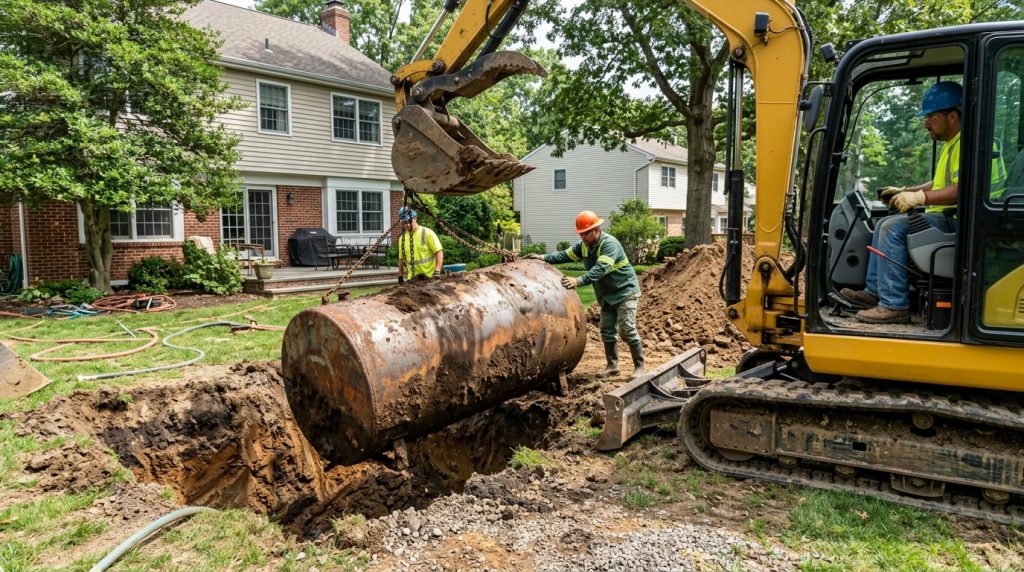
The removal team will carefully excavate the area around the tank and pump out any remaining oil or sludge. This material must be properly disposed of according to state regulations.
3. Tank Removal or Abandonment
Depending on your property’s layout and local regulations, the tank will either be completely removed or properly abandoned in place. Abandonment involves cleaning the tank, cutting openings for inspection, filling it with sand or concrete slurry, and documenting the process.
4. Soil Testing
Soil samples are collected and tested for petroleum contamination. If contamination is detected, remediation may be necessary. Clean soil test results provide peace of mind and documentation for future property transactions.
5. Site Restoration
After removal or abandonment, the excavated area is backfilled, compacted, and restored to its original condition.
Costs and Financial Considerations
Underground oil tank removal costs in New Jersey typically range from $2,000 to $5,000 for straightforward removals. However, several factors can affect the final price:
- Tank size and depth
- Accessibility and landscaping obstacles
- Soil contamination levels
- Required remediation efforts
- Local permit fees
While the upfront cost may seem significant, it’s far less expensive than dealing with contamination cleanup, property devaluation, or legal liability down the road. Many homeowners find that proactive tank removal actually increases their property value and marketability.
Choosing the Right Professional for the Job
Underground oil tank removal requires specialized expertise, proper licensing, and comprehensive insurance coverage. Whether you’re a residential homeowner or managing a commercial plumbing property, selecting a qualified contractor is essential.
Look for contractors who:
- Hold proper New Jersey licensing and certifications
- Carry adequate liability and environmental insurance
- Provide detailed written estimates
- Have experience with local DEP regulations
- Offer comprehensive documentation and soil testing
For more expert guidance on maintaining your home’s plumbing and heating systems, visit our Plumbing Tips & Advice section.
Take Action Today to Protect Your Property
If you suspect or know you have an underground oil tank on your New Jersey property, don’t wait for problems to develop. Proactive removal protects your family, your finances, and the environment.
At NJ Pro Plumbers, our experienced team handles underground oil tank removal with professionalism and precision. We manage every aspect of the process—from permits and excavation to soil testing and site restoration—ensuring full compliance with New Jersey regulations.
Ready to address your underground oil tank concerns? Contact us today for a free consultation and estimate, or call us 24/7 at 973-831-4333. Our experts are standing by to answer your questions and schedule your tank assessment.
Have a plumbing problem right now?
Our licensed NJ master plumbers are available 24/7 — no extra charge for nights and weekends.