If you own an older home in New Jersey, there’s a possibility you have an underground oil storage tank (UST) buried on your property. While these tanks were once a common heating fuel storage solution, they now pose significant environmental and financial risks to homeowners. Understanding when and how to address underground oil tank removal is crucial for protecting your property value and avoiding costly contamination issues.
Why Underground Oil Tanks Are a Concern
Underground oil tanks typically have a lifespan of 15-20 years, though many New Jersey homes still have tanks that are 30, 40, or even 50 years old. Over time, these steel tanks corrode and develop leaks, allowing heating oil to seep into the surrounding soil and potentially contaminate groundwater.
The environmental and financial consequences of a leaking underground oil tank include:
- Soil and groundwater contamination requiring extensive remediation
- Cleanup costs ranging from $10,000 to over $100,000
- Difficulty selling your home or securing financing
- Potential fines from the New Jersey Department of Environmental Protection (NJDEP)
- Health risks to your family and neighbors
Signs You May Have an Underground Oil Tank
Many homeowners aren’t aware they have an underground tank, especially if they purchased their home after converting to natural gas or another heating source. Here are common indicators:
Visible Warning Signs
- Fill and vent pipes protruding from the ground near your foundation
- Concrete patches in your basement floor where pipes were removed
- An old oil furnace or boiler that’s been disconnected
- Property records or disclosure statements mentioning oil heat
- Homes built before 1980 in areas where natural gas wasn’t available
The Underground Oil Tank Removal Process
Professional oil tank removal involves several critical steps to ensure safe, compliant extraction and disposal:
1. Tank Location and Assessment
Licensed professionals use ground-penetrating radar and other detection methods to locate the tank and assess its condition. This evaluation determines whether the tank has leaked and the extent of any contamination.
2. Permit Acquisition
In New Jersey, underground oil tank removal requires permits from local authorities and must comply with NJDEP regulations. Professional plumbing contractors handle all necessary paperwork and ensure regulatory compliance.
3. Tank Excavation and Removal
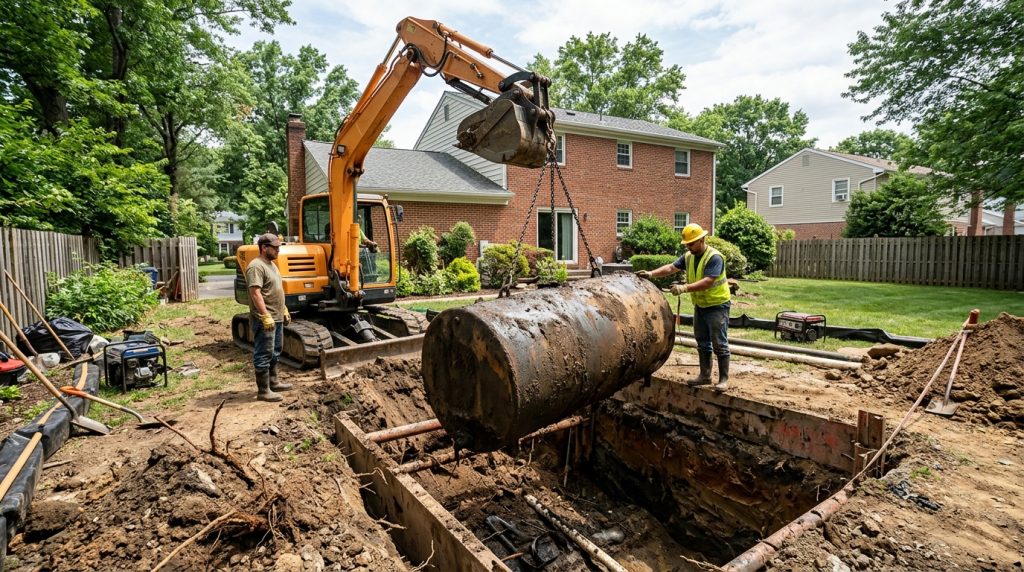
The removal team excavates the area around the tank, pumps out any remaining oil, and carefully extracts the tank. The excavation site is then inspected for contamination.
4. Soil Testing and Remediation
Soil samples are collected and tested for petroleum contamination. If contamination is detected, remediation may involve removing contaminated soil and replacing it with clean fill.
5. Site Restoration
Once the tank is removed and any contamination addressed, the excavation site is backfilled, compacted, and restored to its original condition.
New Jersey Regulations and Requirements
New Jersey has strict regulations governing underground oil tank removal. The NJDEP requires:
- Licensed contractors to perform all removal work
- Proper closure procedures including cleaning, purging, and disposal
- Soil testing at the time of removal
- Documentation and reporting of all removal activities
- Remediation of any contamination discovered
Homeowners who fail to properly address underground oil tanks may face enforcement actions, fines, and liability for contamination cleanup.
Financial Assistance Programs
New Jersey offers several programs to help homeowners with tank removal and cleanup costs:
- The Heating Oil Tank Reimbursement Program provides up to $5,000 for removal and $3,000 for remediation
- The Petroleum Underground Storage Tank Remediation, Upgrade and Closure Fund assists with cleanup costs
- Some municipalities offer additional local assistance programs
Why Professional Oil Tank Removal Matters
While it may be tempting to cut costs, underground oil tank removal is not a DIY project. Professional contractors have the expertise, equipment, and licensing required to:
- Safely extract tanks without causing environmental damage
- Navigate complex regulatory requirements
- Properly dispose of tanks and contaminated materials
- Provide documentation needed for real estate transactions
- Identify and address contamination issues
For commercial plumbing properties with larger tanks, professional removal is even more critical due to increased regulatory scrutiny and potential liability.
Protecting Your Property Investment
Whether you’re planning to sell your home or simply want to eliminate a potential hazard, addressing an underground oil tank proactively is a smart investment. Many homebuyers and mortgage lenders now require tank removal or certification before completing transactions.
For more guidance on maintaining your plumbing systems and protecting your property, visit our plumbing tips and advice section.
Schedule Your Underground Oil Tank Assessment Today
Don’t wait until a leaking underground oil tank becomes a costly environmental disaster. NJ Pro Plumbers provides comprehensive underground oil tank removal services throughout New Jersey, ensuring compliance with all state and local regulations while protecting your property and the environment.
Our experienced team handles every aspect of the removal process, from initial assessment to final site restoration. We work with your insurance company and help you access available reimbursement programs to minimize your out-of-pocket costs.
Ready to address your underground oil tank concerns? Contact us today for a free assessment, or call us 24/7 at 973-831-4333. Our licensed professionals will evaluate your situation and provide a detailed removal plan tailored to your property’s specific needs.
Have a plumbing problem right now?
Our licensed NJ master plumbers are available 24/7 — no extra charge for nights and weekends.